
 Español
 A small plane crashed near westbound Highway 44 and South Clarkwood Road, near Corpus Christi International Airport, on Monday evening, April 13, 2026, leaving two people critically injured. Local reporting said the aircraft was approaching the runway when it went down, and emergency crews responded to a fire at the scene. This happened in a part of Corpus Christi where airport traffic, Highway 44, industrial access routes, and nearby railroad infrastructure all sit close together, which helps explain why the response quickly grew beyond a typical roadside emergency.

What Happened Near Highway 44 in Corpus Christi
Public reports so far point to a small single-engine aircraft crashing shortly before ~7:15 to 7:30 p.m. near the airport approach area. KIII reported that the aircraft crashed near CCIA while on approach, caught fire, and left two people critically injured. KRIS likewise reported a crash near westbound Highway 44 by the airport, with police directing drivers away from the area. At this stage, the public facts are still developing, and the FAA’s standard process is that a preliminary report is usually posted the next business day, while the National Transportation safety Board (NTSB) provides further updates if it leads the investigation.
In the first hours after an aviation crash, initial news reports usually describe the location, visible scene conditions, rescue efforts, and the number of injured people. The more technical facts often come later through the Federal Aviation Administration (FAA) or NTSB records, maintenance documents, registry information, witness interviews, radar and ADS-B (Automatic Dependent Surveillance-Broadcast) data, and wreckage examination. In other words, the public may know where the plane came down long before investigators know why it came down.

Emergency Response and Public Impact
This crash did not happen in an isolated pasture. It happened alongside one of the main corridors serving the airport area. Local coverage reported that westbound Highway 44 was shut down and that nearby railroad tracks were also closed during the response. KIII also reported severe burns and a post-crash fire. In a setting like this, emergency response is not limited to the aircraft itself. Crews must secure the roadway, protect motorists, manage access points, isolate the fire scene, and preserve the crash scene for federal investigators.
That broader disruption makes sense given the setting. The City of Corpus Christi describes the Corpus Christi International Airport (CCIA) as a city-operated airport with a robust general aviation community, two fixed-base operators, an on-site flight school, and support services. Highway 44 is also a major arterial connection to the airport and industrial areas west of the city. When a plane goes down near that corridor, the impact reaches beyond the people on board. It can affect highway traffic, nearby businesses, rail operations, emergency routing, and airport-adjacent activity all at once.
Official Statements and What Is Confirmed So Far
At the time of writing, the most consistently reported public facts are these: the aircraft was a small single-engine plane, the crash occurred near CCIA while the plane was approaching the runway, there was a fire, and two people were critically injured. The FAA states that, for general aviation accidents, local authorities typically identify names and medical conditions first; a preliminary FAA report is generally posted the next business day; and, if the NTSB is investigating, the NTSB will provide further updates. It is acknowledged that the cause is unknown until investigators examine the aircraft, engine, propeller, controls, records, and surrounding data.
Common Non-Pilot Causes Investigators Consider in Small-Plane Crashes
Because the cause remains unknown, it is important not to frame this event as a pilot-fault story. In general aviation cases, investigators often look at a wide set of possibilities that have nothing to do with blaming the person at the controls. Those possibilities can include mechanical malfunction, a latent component failure, a maintenance error, a fuel-system problem, an ignition issue, a control-linkage separation, a cracked structural part, or a condition that only becomes apparent after the aircraft is examined following the crash. NTSB safety material states that mistakes made during maintenance and inspection procedures have led to in-flight emergencies and fatal accidents, and that system or component failures are among the most common defining events for fatal accidents across various sectors of general aviation.
NTSB and FAA materials also show how broad that category can be. NTSB occurrence definitions include “system/component failure or malfunction (non-powerplant)” for failures of aircraft systems outside the engine itself. FAA service-difficulty reporting is specifically designed to collect failures, malfunctions, and defects so the agency can evaluate certification standards, maintenance programs, and regulatory requirements. That framework exists because some crashes are not simply “accidents” in the ordinary sense. Sometimes they begin with a part, system, assembly, linkage, control, or installation that failed when it should not have failed.

Safety Measures and Industry Standards in General Aviation
Aviation safety starts long before touchdown. The FAA emphasizes preflight planning, emergency preparedness, and maintaining enough altitude and options to permit a glide to a suitable landing area if engine power is lost. The agency’s training guidance also centers on the fundamentals of an emergency: maintain aircraft control, manage airspeed, and select the best available landing site. Those principles sound simple on paper, but their practical value depends on what the aircraft and its systems are doing in real time.
On the maintenance side, the standards are just as important. The NTSB has warned that even experienced technicians can make errors during maintenance and inspection, and that those errors can lead to fatal results. The FAA’s Service Difficulty Reporting program exists to identify failures and malfunctions early enough to catch patterns before they produce more serious outcomes. In other words, aviation safety is not just about how a plane is flown. It is also about how it is designed, built, maintained, inspected, documented, and repaired.

Critical Questions Families and Investigators Will Want Answered
In a case like this, the most important questions are factual, not accusatory.
- Was there evidence of engine-power loss, partial power, fuel interruption, ignition trouble, or control problems before impact?
- Did the aircraft have any recent maintenance, repair work, part replacements, or recurring mechanical discrepancies?
- Were there any prior service-difficulty reports, bulletins, advisories, or known issues involving the aircraft model or major components?
- What do radar, ADS-B, ATC communications, and witness accounts show about the aircraft’s speed, altitude, and path in the final moments?
- Did the crash sequence involve a post-impact fire, and if so, how quickly did it develop?
- What do the engine, propeller, controls, and cockpit instruments show on examination?
- Were there any structural fractures, linkage separations, cracked parts, fuel-system failures, or component anomalies identified in the wreckage?
- What do maintenance logs, annual inspections, and mechanic entries reveal about the aircraft’s recent condition?
Those are the kinds of questions that determine whether the case is simply an accident investigation or a deeper mechanical, maintenance, or product case. FAA and NTSB materials make clear that those possibilities are real and recurring in general aviation.
General Aviation Safety by the Numbers
General aviation (GA) refers to all civil aviation that is not part of scheduled airline service or military operations. It covers a wide range of activities, including flight training, recreational flying, business travel, agricultural operations, and air ambulance services. In the United States, general avaiation accounts for the majority of aircraft operations and serves more than 5,000 public-use airports. The FAA says general aviation includes more than 275,000 aircraft and more than 90 percent of U.S.-registered aircraft. Its 2025 General Aviation Safety Fact Sheet reports that fiscal year 2024 had an estimated 195 fatal accidents and 337 fatalities, and the general aviation fatal accident rate was estimated at 0.68 per 100,000 flight hours. The FAA’s January/February 2026 Safety Briefing then reported that fiscal year 2025 ended with a general aviation fatal accident rate of 0.61 per 100,000 flight hours, which it described as below the year’s reduction goal and better than the previous two years cited in the publication.
The NTSB also maintains U.S. civil aviation accident statistics through 2024 and a general aviation accident dashboard that compiles findings and trends. That broader context matters because it shows two things at once: small-aircraft crashes are relatively uncommon on any given day in any one city, but they are common enough nationally that investigators, regulators, manufacturers, maintenance providers, and lawyers all recognize recurring patterns.

How Often Mechanical Failure and Component Problems Matter
There is not one single percentage that neatly captures every mechanical or product-related aviation case, and anyone who gives one without context is oversimplifying. What the official sources do show is that system and component failures repeatedly appear in fatal and nonfatal general aviation investigations. The NTSB has expressly said that system or component failures are among the most common defining events for fatal accidents across various sectors of general aviation. FAA service-difficulty reporting exists because failures and malfunctions in the field can reveal design, manufacturing, inspection, and maintenance problems that need regulatory attention.
That is why product-defect and maintenance-defect theories remain important in plane-crash litigation. Even where a crash begins with an in-flight emergency, the underlying issue may trace back to an engine component, a fuel-delivery problem, a faulty installation, a cracked structural part, a control-system defect, or an improperly maintained assembly. NTSB case materials routinely document mechanical contributors ranging from throttle-linkage issues and carburetor or fuel-system problems to magneto failures and cracked landing-gear components.
Common Aviation Product Defects That May Contribute to Small-Plane Crashes
When lawyers and investigators talk about “product defects” in aviation, they are not limited to one dramatic manufacturing mistake. The defect can exist at several levels.
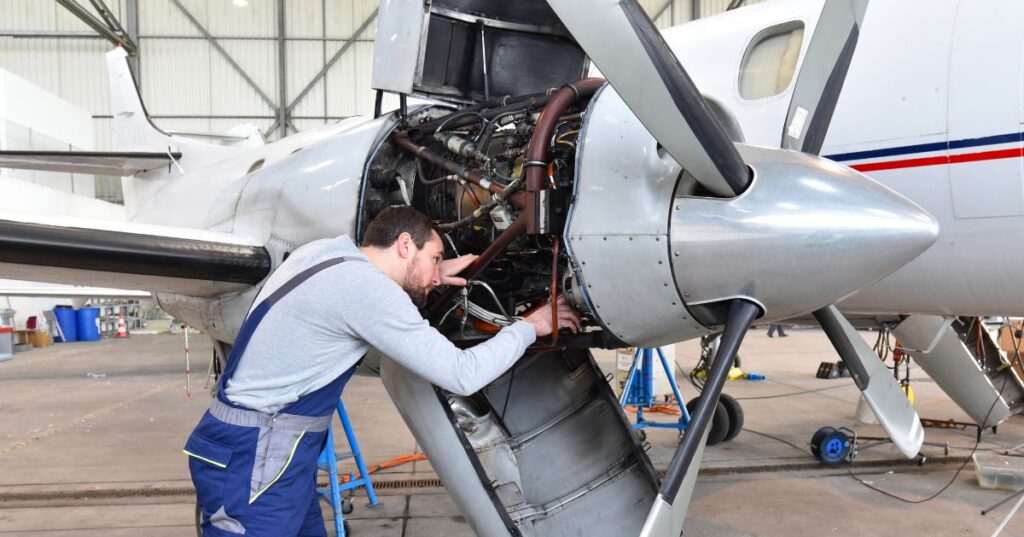
One category is engine and power defects. These cases can involve failures in ignition components, magnetos, pistons, cylinders, fuel pumps, carburetors, fuel-injection parts, throttle bodies, propeller governors, or related assemblies. NTSB records include accidents tied to throttle-arm linkage security issues, magneto-related failures, and component malfunctions associated with loss of engine power.
Another category is fuel-system defects. Fuel starvation and fuel interruption are not always cases of “pilot fuel planning.” They can also involve failed pumps, blocked delivery, metering problems, carburetor defects, contamination pathways, or installation and adjustment errors. The NTSB’s factual reports frequently trace mechanical sequences through the fuel-metering and throttle-control systems because small deviations there can have immediate consequences in flight.
A third category is flight-control and linkage defects. A control cable, attachment point, clamp, hinge, servo connection, or linkage that is improperly designed, assembled, routed, or secured can change the way an airplane responds under load. NTSB materials include cases involving detached throttle linkage and other control-connection problems. Those failures can be especially dangerous on approach, when the aircraft is already operating with little time and little altitude margin.
A fourth category is structural and airframe defects. Cracks in landing-gear forks, actuator failures, bulkhead cracks, degraded fittings, and fatigue-related part failures may begin as a maintenance concern but end as a product or design case if the part was under-designed, defectively manufactured, insufficiently tested, or inadequately warned about. NTSB and FAA materials show service-difficulty patterns involving cracked landing-gear components and actuator failures that did not always produce immediately reportable accidents but still revealed repeating failure modes.
A fifth category is warning, instruction, and inspection-pathway defects. Sometimes the issue is not just the part itself, but the lack of adequate warning, inspection criteria, installation guidance, or service instructions. The NTSB’s work in larger aviation cases has repeatedly highlighted how production inspection guidance, in-service inspection techniques, and design precautions can affect safety outcomes. That principle applies in general aviation, too. A component that is hard to inspect, hard to install, or prone to hidden degradation may create a serious liability issue even if it looks ordinary on the parts list.
How a Products Case in an Aviation Crash Usually Works
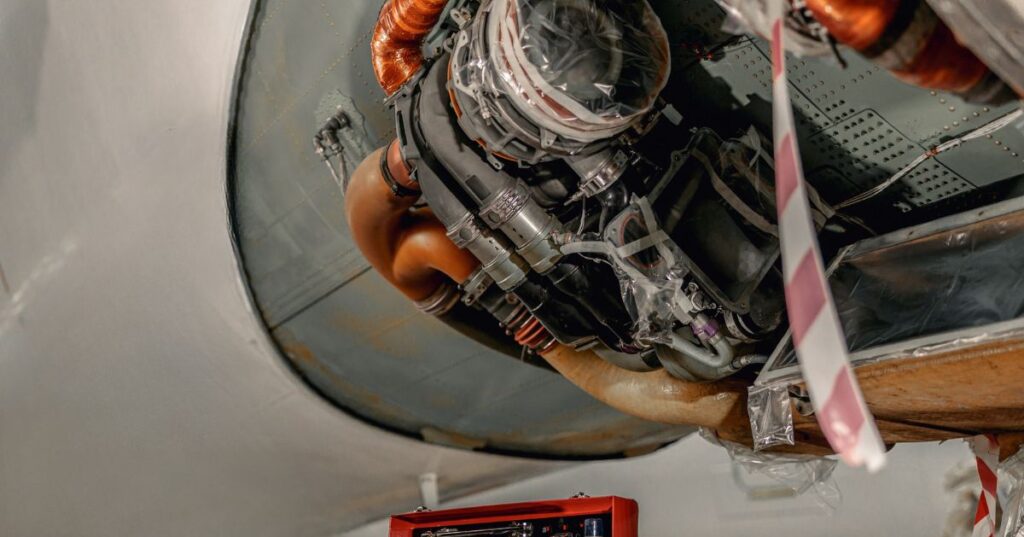
An aviation products case usually begins with preservation, not conclusions. The first step is making sure the wreckage, engine, propeller, avionics, maintenance logs, inspection records, component history, and digital data are preserved before anything is discarded, altered, or lost. In many cases, the aircraft itself is the central piece of evidence. The physical wreckage can show fracture patterns, burn patterns, linkage position, part separations, and whether a failure happened before impact or because of impact.
The second step is identifying all potentially responsible entities. That can include the aircraft manufacturer, engine manufacturer, propeller manufacturer, component suppliers, overhaul shops, mechanics, maintenance facilities, avionics installers, part distributors, owners, fixed-base operators, and others who serviced or modified the aircraft. Aviation is layered by design. A small personal plane may still contain systems, engines, instruments, control components, and replacement parts sourced from multiple companies, with inspection and maintenance work performed by still others.
The third step is technical analysis. That usually requires aviation experts, mechanics, engineers, metallurgists, fire-cause specialists, and sometimes human-factors experts. They review maintenance records, service bulletins, FAA service-difficulty data, prior occurrences, inspection intervals, component history, and the failure sequence itself. The FAA’s Service Difficulty Reporting program exists precisely because in-service failures and malfunctions can reveal larger safety patterns that matter in litigation as well as regulation.
The fourth step is narrowing the legal theory. In broad terms, aviation product cases commonly proceed under one or more of these theories: a design defect, meaning the product was unsafe even when built as intended; a manufacturing defect, meaning this particular unit departed from its intended design; or a warnings/instructions defect, meaning the manufacturer failed to provide adequate information for safe use, inspection, installation, or maintenance. In some cases, there is also a separate negligence claim against a maintenance provider or installer if the component itself was sound but the work performed on it was not. Those are general products concepts, but in aviation, they are usually built around unusually technical evidence. Supported cases tend to rise or fall on documentation, expert examination, and the physical wreckage.
The fifth step is causation. It is not enough to show that a part had a problem. The claimant generally must show that the defect or maintenance failure actually contributed to the crash or to the severity of the injuries. That is often where NTSB, FAA, component testing, and expert reconstruction become central. Some cases fail here. Others become strong precisely because the records and wreckage show a consistent failure sequence. That is why early evidence protection is so important.

Who May Be Involved in a Case Like This, and How
In a serious small-plane crash, what appears to be a single event often involves multiple layers behind the scenes. While the public may see one aircraft and one crash site, aviation operates as a system made up of many moving parts.
The aircraft owner can play a role because ownership often comes with responsibility for maintenance decisions, inspection schedules, storage, repairs, upgrades, and overall operating conditions. A maintenance provider or mechanic may be implicated if recent work was performed on critical components such as the engine, fuel system, controls, avionics, landing gear, or airframe—especially if something was installed incorrectly, insufficiently inspected, or approved despite a defect. Safety materials from the National Transportation Safety Board warn that maintenance and inspection errors have contributed to fatal accidents.
The manufacturer of the aircraft may also be relevant if the crash is linked to a design issue, structural weakness, inadequate warning, or a recurring defect within that model. Likewise, the engine or component manufacturer may come into focus if the failure involves the powerplant, ignition, fuel delivery system, propeller, or other integrated assemblies. A parts distributor or overhaul facility may be involved if a rebuilt, remanufactured, or replacement part failed after being placed back into service.
Other contributors can include a fixed-base operator or service provider if fueling, storage, or ground support introduced or worsened an unsafe condition. An installer or avionics shop may also be at issue if modifications or add-on systems were improperly wired, routed, mounted, or integrated, creating additional risk.
The point is not that every one of these entities is always at fault. Rather, aviation is an interconnected system, and when something goes wrong, the cause is often found in how that system was built, maintained, and supported over time. Investigations by agencies like the Federal Aviation Administration and the National Transportation Safety Board reflect that reality by examining not just the flight itself, but also maintenance records, prior discrepancies, service data, and the history of individual components.
Why Early Investigation and Evidence Preservation Matter
Aviation evidence is unusually fragile from a litigation standpoint. The scene gets cleared. The aircraft gets moved. Burned components degrade further. Digital data disappears. Witnesses forget details. Maintenance records can be scattered across owners, mechanics, shops, and vendors. The FAA says preliminary reporting happens quickly, but the deeper investigation develops over time. That timing gap is exactly why families and injured survivors often need preservation efforts started early.
In a potential aviation products case, preservation can include the wreckage itself, engine teardown opportunity, propeller examination, avionics download, ADS-B and radar data, maintenance and annual-inspection logs, work orders, invoices, photographs, surveillance footage, dispatch communications, airport records, and emergency-response records. Once those pieces are lost, they are often impossible to recreate with confidence. That is true whether the case ultimately points to a product defect, a maintenance failure, or another non-pilot cause.
Legal Perspective
For injured survivors and families, the central question is usually what happened, and could it have been prevented? In aviation cases, the answer often depends on specialized evidence that ordinary accident cases do not require. The presence of federal investigators does not eliminate the need for private evidence preservation. It simply means that the technical record may be broad, layered, and slower to emerge. That is especially true when a crash may involve mechanical failure, component malfunction, maintenance error, or a product issue.
Perkins & Perkins | Aviation Injury and Wrongful Death Cases in Texas
At Perkins & Perkins, we handle catastrophic injury and wrongful death cases across Texas, including cases involving fires, transportation incidents, defective products, and other serious accidents. In a plane-crash case, early action matters because the facts are technical and the evidence is perishable. If a crash may involve a mechanical failure, defective component, faulty repair, or other preventable safety issue, a careful investigation can make a real difference.
Our firm as secured record breaking jury verdicts for those injured in Texas. If you or a loved one needs the assistance of a personal injury lawyer, call us at 361-853-2120 or visit us at perkinsperkinslaw.com. We offer free consultations, and there is never a fee unless we win your case.
We extend our sincere thoughts to the people injured in this Highway 44 crash and to everyone affected by it in Corpus Christi. At this stage, the cause remains under investigation, and the full facts deserve a careful, disciplined review grounded in evidence, not guesswork.
Disclaimer
This article is for informational purposes only and is not legal advice. Reading it does not create an attorney-client relationship. The reported facts in this matter are still developing and may change as additional information is released by local authorities, the FAA, or the NTSB.