
 Español
 Industrial Accident Attorney in Corpus Christi
Corpus Christi Industrial Accident Attorneys for Injured Workers
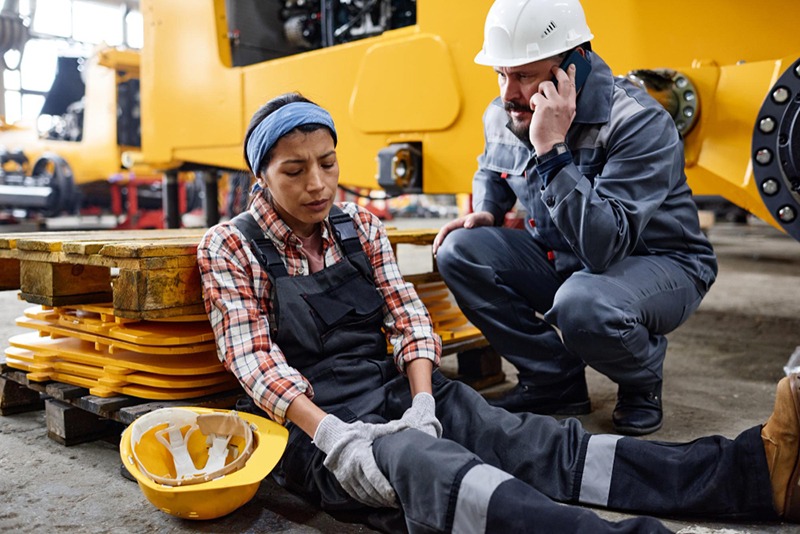
Industrial work is demanding and dangerous, performed around heavy machinery, hazardous chemicals, high-pressure systems, elevated work areas, and moving vehicles. When companies fail to follow safety rules or cut corners, workers can suffer serious and life-changing injuries.
If you were injured at an industrial site in Corpus Christi or South Texas, Perkins & Perkins can help you understand your rights. You may be able to pursue compensation for medical bills, lost income, pain and suffering, and other losses.
Your Legal Options After an Industrial Accident
You may have a claim if your injury was caused by unsafe worksite conditions, defective equipment, poor training, negligent contractors, or another company’s failure to follow safety procedures.
You should speak with an attorney if:
- You were seriously injured at an industrial facility
- Your employer or another company blames you
- A contractor, subcontractor, or third party may have caused the accident
- Machinery, equipment, or safety systems failed
- You were exposed to chemicals, fire, electricity, fumes, toxic substances, or gases
- You lost a loved one in a fatal industrial accident
Even if you receive workers’ compensation, you may still have additional legal options depending on who caused or contributed to your injury.
Free Consultation for Your Industrial Accident Case
Choosing the right attorney can dramatically influence your recovery. Perkins & Perkins has a proven record of success, including an $18.1 million verdict, one of the largest construction injury verdicts in Texas history. We offer free consultations and work on a contingency fee basis, so unless we win, you do not pay a cent. Contact us today to take the first step toward rebuilding your life.
Understanding Your Compensation Options
Industrial accident claims can be complicated because more than one avenue of liability, and ultimately compensation, may be available. Depending on what happened, you may have a workers’ compensation claim, a third-party injury claim, a non-subscriber employer claim, or a product liability claim involving defective equipment.
Perkins & Perkins can review the facts, identify every responsible party, and pursue the full value of your losses, including medical bills, lost income, reduced earning ability, pain and suffering, impairment, disfigurement, and wrongful death damages when applicable.
How Liability Is Determined in an Industrial Accident
Industrial accidents are rarely simple. You may wrongly assume the accident was your fault, or you may know another company or person caused it. Either way, liability should be based on evidence, not assumptions or pressure from an employer, contractor, or insurance company.
Our attorneys review what happened, who controlled the worksite, who built it, what safety rules applied, and whether those rules were followed. This investigation can affect whether you have a claim, who can be held responsible, and how much compensation may be available.
Important evidence may include:
- Incident reports: Often the first written account of what happened. They identify who was involved, document hazardous conditions, and reveal whether supervisors recognized safety violations or tried to explain away the cause.
- OSHA records: May reveal prior violations, citations, inspections, and corrective actions that show a pattern of unsafe practices rather than a one-time failure.
- Witness statements: Establish how the accident occurred, who was responsible for the work being performed, and whether safety procedures were followed, while preserving details that fade or get disputed later.
- Equipment and maintenance records: Show whether machinery, tools, vehicles, or safety systems were properly inspected, maintained, repaired, or pulled from service, and can expose ignored maintenance or known defects.
- Training and safety records: Show whether workers were properly trained, supervised, and equipped, or were sent to perform dangerous work without adequate safeguards.
- Contractor agreements: Help determine which company controlled the worksite, supervised the work, supplied equipment, or assumed responsibility for safety, often identifying who is legally on the hook.
- Business and insurance records: Identify every company involved, uncover affiliated entities and Secretary of State registrations, confirm what coverage existed, and reveal additional sources of compensation that are not obvious at first.
- Electronic data and communications: Emails, texts, dispatch records, work orders, GPS data, and surveillance footage can establish what supervisors knew, when they knew it, and whether safety concerns were reported before the accident.
- Engineering and expert analysis: In complex cases, engineers reconstruct equipment failures, structural defects, and electrical issues to pin down the root cause and show how it could have been prevented.
Industrial Accident Cases We Handle in Corpus Christi
Industrial accidents happen across many different settings. Perkins & Perkins represents injured workers and families in cases involving unsafe equipment, negligent companies, dangerous facilities, and serious worksite hazards.
Oilfields and Drilling Sites
Oilfields and drilling sites involve heavy equipment, high-pressure systems, flammable materials, elevated platforms, excavations, and multiple contractors sharing one location. Workers can be seriously hurt when trenches or excavations collapse from inadequate shoring, or when companies fail to maintain equipment, train workers, secure tools, or follow required safety procedures.
Refineries and Petrochemical Plants
Refineries and petrochemical plants expose workers to fires, explosions, toxic chemicals, pressure failures, extreme temperatures, and complex machinery. Injuries happen when companies fail to control hazardous substances, maintain valves and pressure vessels, follow lockout/tagout during maintenance, or provide adequate training and protective equipment. The results can include severe burns, respiratory injuries, permanent disability, and death.
Manufacturing Plants and Factories
Manufacturing plants run on conveyors, presses, grinders, forklifts, robotic systems, and moving machinery. Workers are injured when machines lack proper guards, emergency stops fail, lockout/tagout is ignored, or training and supervision fall short. Poor maintenance and excessive production demands can lead to crush injuries, amputations, electrocution, fractures, and traumatic brain injuries.
Pipeline and Terminal Facilities
Pipeline sites, fuel terminals, and tank farms handle large volumes of oil, gas, and hazardous chemicals under high pressure. Workers face flammable vapors, confined spaces, and pressurized equipment. Corrosion, defective valves, faulty welds, poor inspections, or over-pressurization can cause leaks, ruptures, fires, explosions, and confined-space incidents resulting in catastrophic injury.
Warehouses and Distribution Centers
Warehouses and distribution centers are fast-paced environments full of forklifts, pallet jacks, conveyors, loading docks, and heavy inventory, all under demanding shipping schedules. Unsafe stacking, unstable shelving, poor forklift operation, inadequate traffic control, and falling merchandise cause loading-dock falls, struck-by incidents, and crush injuries, along with collisions involving forklifts or commercial vehicles, that can be life-changing.
Shipyards, Ports, and Maritime Industrial Sites
Corpus Christi's port and maritime facilities are among the busiest industrial worksites in South Texas, involving cargo ships, barges, cranes, containers, and hazardous cargo. Workers are injured when companies fail to coordinate operations, secure loads, inspect lifting devices, or control vehicle traffic. Depending on where the accident happened, these cases may involve maritime law, state law, or both.
Power Plants and Utility Sites
Power plants and utility facilities expose workers to high-voltage systems, turbines, boilers, transformers, substations, and confined spaces. Failures to follow lockout/tagout, de-energize equipment, or provide fall protection can cause arc flashes, electrocutions, explosions, and falls, leading to severe burns, paralysis, and neurological injury.
Industrial Construction Sites
Industrial construction sites combine many of the most dangerous hazards in heavy industry: cranes, scaffolding, steel structures, welding, excavations, and energized systems. Injuries and fatalities occur when companies fail to coordinate safety, inspect equipment, provide fall protection, install trench shoring, locate underground utilities, or follow OSHA requirements.
Data Centers, Energy Storage, and Critical Infrastructure Facilities
Data centers and battery energy storage facilities are expanding rapidly across Texas as demand grows for cloud computing, AI, and reliable power. They require complex high-voltage systems, backup generators, battery storage, and specialized mechanical equipment, often built by large crews of contractors and subcontractors working side by side. Workers face energized systems, arc flash events, battery fires, thermal events, and confined spaces. When an accident happens, determining responsibility can require investigating general contractors, electrical contractors, equipment manufacturers, engineering firms, and facility operators to identify every party that created or failed to correct an unsafe condition.
Agricultural Operations and Farming Accidents
South Texas agriculture exposes workers to tractors, combines, harvesters, grain bins, PTO shafts, augers, and hazardous chemicals. Rollovers, machinery entanglements, grain engulfment, falls, chemical exposure, and electrocutions from irrigation systems or overhead lines are common. Liability may extend to equipment manufacturers, labor contractors, property owners, and maintenance providers whose negligence contributed to the accident.
Food Processing Facilities
Meat packing, poultry processing, cold storage, and produce packing operations rely on high-speed lines, cutting equipment, industrial mixers, refrigeration, and sanitation chemicals, often running continuously. Unguarded machinery, ignored lockout/tagout, and hazardous chemicals cause amputations, crush injuries, severe lacerations, and chemical burns. Liability may reach equipment manufacturers, sanitation companies, staffing agencies, and other third parties.
Grain Elevators and Feed Mills
Grain elevators, feed mills, and storage terminals present grain engulfment, combustible dust explosions, confined spaces, and entanglement in augers and bucket elevators. Failures to control dust, secure confined spaces, or provide fall protection often cause catastrophic injuries or fatalities, with potential liability for facility operators, equipment manufacturers, and maintenance contractors.
Commercial Fishing and Seafood Processing
The Coastal Bend's fishing and seafood industries expose workers to vessels, docks, cranes, conveyors, and processing equipment. Defective equipment, unsafe docks, poor maintenance, and inadequate training cause amputations, crush injuries, falls, and drowning incidents. Depending on the worker's duties and where the accident occurred, claims may involve maritime law, state law, or both.
Serious Injuries from Industrial Accidents
Industrial accidents involve heavy machinery, high-voltage systems, hazardous chemicals, explosions, confined spaces, and elevated work areas, all capable of causing catastrophic harm. Even injuries that look minor at first can lead to permanent disability, chronic pain, and an inability to return to work. Common industrial injuries include:
- Burns and arc flash injuries: thermal, chemical, electrical, and explosion-related burns, often requiring skin grafts and reconstructive surgery
- Traumatic brain injuries: from falls, falling objects, explosions, or equipment failures, sometimes causing permanent cognitive and neurological deficits
- Spinal cord injuries and paralysis: partial or complete loss of mobility from damage to the spinal cord or vertebrae
- Crush injuries and amputations: from machinery, conveyors, forklifts, collapsing structures, or trench cave-ins
- Fractures and orthopedic trauma: complex and multiple fractures, joint injuries, and neck and back injuries requiring surgery and long rehabilitation
- Respiratory and chemical exposure injuries: lung damage and toxic-substance injuries from smoke, gases, silica, asbestos, or solvents
- Electrical injuries and electrocution: from energized equipment, exposed wiring, substations, and power lines
- Eye injuries, vision loss, and hearing loss: from chemicals, flying debris, welding arcs, explosions, or excessive noise
- Internal organ and nerve damage: blunt-force and crush trauma affecting organs, peripheral nerves, and connective tissue
- Severe lacerations and degloving injuries: deep cuts and tissue loss from rotating equipment and power tools
- Occupational illnesses: developed after prolonged exposure to toxic chemicals, asbestos, silica, or heavy metals
- Psychological injuries: PTSD, anxiety, and depression following a catastrophic accident
- Permanent disability and disfigurement: life-changing injuries and scarring that limit work and daily life
- Wrongful death:when a fatal accident is caused by negligence, unsafe conditions, or defective equipment
These injuries can affect your ability to work, support your family, and return to daily life.
What to Do After an Industrial Accident
After a serious industrial injury, your health comes first. If possible:
- Get medical care immediately.
- Report the accident to your supervisor.
- Write down what happened while it is fresh.
- Take photos of the area, equipment, and injuries if safe.
- Get names of witnesses.
- Keep copies of medical records and work documents.
- Do not sign anything or accept a settlement without legal advice.
- Speak with an industrial accident attorney about your options.
Important evidence can disappear quickly after an industrial accident. Acting early can help protect your rights.
Trusted Attorneys for Industrial Accident Representation
Perkins & Perkins represents injured workers and families throughout Corpus Christi and South Texas. Our attorneys understand how serious industrial accident cases can be and how much is at stake for workers and their families.
Clients turn to us because we offer:
- More than 80 years of combined legal experience representing injured individuals and families
- A proven history of significant results in serious injury and wrongful death cases
- A record-setting $18.1 million construction injury verdict in 2022, showing our ability to try complex injury cases before a jury
- Experienced trial attorneys who prepare every case as if it will go to trial, and are ready to present it to a jury when a fair settlement is not offered
- A willingness to take on large corporations, contractors, and insurers when their negligence causes serious injuries
- Thorough investigations focused on identifying every responsible party and preserving critical evidence
- Direct, personal attention from experienced attorneys, not just case managers or support staff
- Free, no-obligation consultations
- No attorney’s fees unless we recover compensation for you
We handle the legal process so you can focus on your health, your family, and your future.
Get a Free Industrial Workplace Accident Case Evaluation
You do not have to face your employer or insurance carrier alone. Perkins & Perkins can investigate what happened, protect your rights, and fight for the compensation you deserve.
Contact Perkins & Perkins today for a free consultation. You pay nothing unless we recover compensation for you.
REQUEST A FEE CASE REVIEW
(361) 853-2120
Frequently Asked Questions
Can I sue after an industrial accident?
Maybe, but the answer is rarely a simple yes or no. Whether you have a lawsuit depends on who caused the accident, where it happened, and whether your employer carries workers’ compensation insurance. Even if you cannot sue your employer, you may still have claims against a general contractor, subcontractor, equipment manufacturer, property owner, maintenance company, or another business whose negligence contributed to your injuries. Every industrial accident deserves its own investigation before anyone tells you what your rights are.
What if my employer says the accident was my fault?
That does not end the conversation. Employers often blame workers before all the facts are known, sometimes before any real investigation has begun. Industrial accidents frequently involve equipment failures, missing safety procedures, inadequate training, poor supervision, or the negligence of another company on the same jobsite. Liability should be based on evidence, not on whoever writes the first incident report.
Do I still have a case if I receive workers' compensation?
Yes. Receiving workers’ compensation benefits does not automatically prevent you from pursuing a claim against someone other than your employer. Many industrial accidents involve multiple companies working together, and one of them, or an equipment manufacturer, may have caused or contributed to the accident. A workers’ compensation claim and a third-party claim often exist at the same time.
What if defective equipment caused my injury?
Industrial equipment is expected to operate safely when properly designed, manufactured, and used as intended. If defective machinery, tools, valves, electrical systems, or safety devices caused your injuries, you may have a product liability claim against the manufacturer, distributor, or another responsible party. Unlike claims against an employer, product liability claims are generally not affected by whether your employer subscribes to workers’ compensation.
What should I do after an industrial accident?
Your health comes first. Get medical attention as soon as possible and report the accident through the appropriate channels. If you are able, photograph the scene, your injuries, the equipment involved, and anything that looks unsafe. Keep copies of medical records and identify witnesses before they become hard to locate. Most importantly, avoid giving recorded statements or signing documents until you understand your rights. Evidence in these cases can disappear quickly, so early action often makes a real difference.
How much is my industrial accident case worth?
Every case is different. Some industrial accident cases may be worth only a few thousand dollars, while others may be worth millions, and the difference is rarely just the injury itself. The evidence, the companies involved, the available insurance coverage, whether future medical care is needed, and the long-term impact on your ability to work all shape the value. We have recovered everything from modest settlements to record-setting jury verdicts because we evaluate each case on its own facts, not with a one-size-fits-all formula.
How long do I have to file a claim in Texas?
In many Texas personal injury cases, the deadline to file suit is two years from the date of the accident, though important exceptions can apply. More to the point, the legal deadline is rarely the practical one. Surveillance footage may be erased, equipment repaired or replaced, witnesses may move, and documents may disappear long before the statute of limitations runs. The sooner an investigation begins, the more evidence can be preserved.
How much does it cost to hire Perkins & Perkins?
Hiring an attorney after a serious industrial accident should not depend on whether you can afford hourly fees. We handle these cases on a contingency fee basis. There are no upfront attorney’s fees, and we advance the costs needed to investigate and pursue your claim. We are only paid if we recover compensation for you. If we do not win, you do not owe us attorney’s fees.
 Posted on Google
 Jen Perez
Trustindex verifies that the original source of the review is Google.
Had a great experiencePosted on Google LilyThey are awesome!!!Posted on Google
 Kimberly VillafuerteGreat service!!Posted on Google
 David De La CruzLooking forward to using P&P attorneys in the future!!Posted on Google
 Angie LongBest Ever! Highly recommend
Speak with an Industrial Accident Attorney Today
After an industrial accident, the companies involved may act quickly to protect themselves. You deserve someone acting quickly to protect you.
Call Perkins & Perkins today to discuss your case with an experienced Corpus Christi industrial accident attorney. Your consultation is free, and there are no fees unless we win.
Schedule A Consultation Today!