
 Español
Defective Tree Stand Accidents: When Hunting Equipment Fails
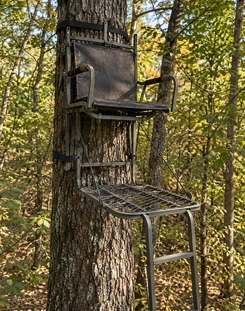
Tree stands are ordinary hunting equipment across Texas and the rest of the country. Hunters use climbing stands, ladder stands, hang-on stands, elevated platforms, climbing sticks, cables, straps, and fall-arrest systems every season. Most of the time, the equipment does exactly what it is supposed to do: support a hunter safely above the ground.
But a tree stand has almost no margin for a serious product failure. A cable, strap, weld, pin, bracket, ladder section, platform, or safety harness may look like a relatively small component. When that component is supporting a person fifteen or twenty feet above the ground, however, a single failure can result in a spinal cord injury, traumatic brain injury, multiple fractures, paralysis, or death.
That is why an investigation after a tree stand fall should not begin and end with the assumption that the hunter simply lost his balance. The better question is often much more specific: what was supposed to keep the hunter in the tree, and did that component fail?
The history of hunting tree stands shows that these are not hypothetical concerns. Federal recalls and reported product-liability cases have involved broken or releasing cables, failed straps, defective welds, locking pins that came out, J-hook failures, structural failures, and safety harnesses that could fail during a fall. Those real-world examples show why preserving the stand and determining exactly what happened can be critical after a catastrophic hunting accident.
Why Tree Stand Falls Can Become Product Liability Cases
A tree stand is not just a platform. It is a system. Depending on the design, the hunter may rely on a steel frame, platform, ladder or climbing assembly, cables or straps wrapped around the tree, locking pins, brackets, welds, fasteners, and a separate fall-arrest system. Each component has a job. If one critical component fails, the entire system may fail with it.
A hunter who suddenly falls may not know which component failed. The event can happen in seconds. A platform may drop. A cable may release. A ladder may shift or buckle. A strap may separate. A weld may fracture. A locking pin may come out. The hunter may remember only that the stand moved underneath him.
That is where a product investigation begins. The physical stand can reveal whether a component fractured before the fall, whether corrosion weakened a cable, whether a weld failed, whether a strap degraded, whether a locking mechanism released, or whether the fall-arrest system itself failed to perform.
How Defective Hunting Tree Stands Have Failed in the Real World
Cable Failures and Cable Assemblies
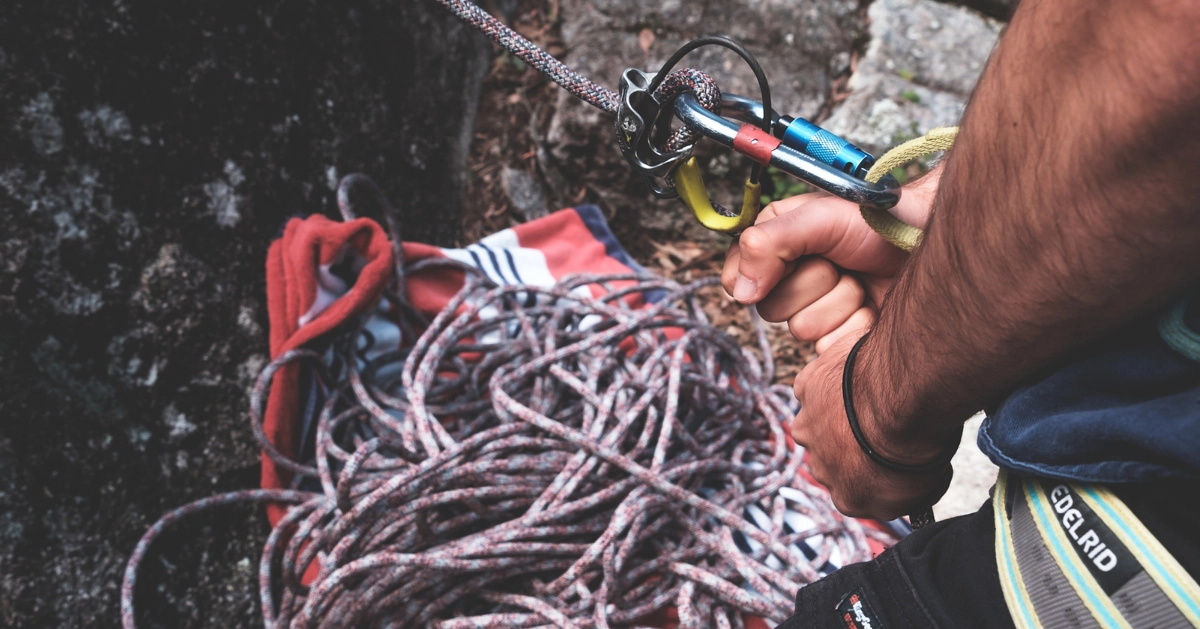
Cables are among the most important components on many climbing tree stands because they secure the stand to the tree while supporting the hunter’s weight. Federal recalls show that cable failures and cable-release problems have occurred repeatedly.
In 2002, the U.S. Consumer Product Safety Commission and API Outdoors announced a recall of about 9,000 hunting tree stands because a cable securing the stand to the tree could break. API Outdoors had received two reports of cables breaking, including one incident in which a hunter fell and suffered leg abrasions. (CPSC recall: API Outdoors hunting tree stands)
More than a decade later, cable assemblies remained a documented failure mode. In 2015, Global Manufacturing recalled approximately 5,300 API Outdoors Marksman climbing stands because the cable assembly could release. According to the CPSC, one reported cable-release incident resulted in a broken vertebra, a fractured rib, and a sprained shoulder. (CPSC recall: API Outdoors Marksman climbing tree stands)
The same year, Big Game recalled about 12,200 climbing tree stands because their cable assemblies could release, creating a fall hazard. These recalls matter because they show a recurring mechanical question in tree stand cases: did the cable itself fail, did a crimp or connection release, or did another part of the attachment system fail to retain the stand? (CPSC recall: Big Game climbing tree stands)
Weld Failures, Locking Pins, and Attachment Hardware
Tree stand failures are not limited to cables. Welds and small pieces of attachment hardware matter just as much because they transfer the hunter’s weight through the stand and into the tree.
In 2019, DICK’S Sporting Goods recalled about 2,600 Field & Stream Timberline hang-on tree stands because the weld on the seat could break and cause the seat to fall from the tree. In another recall, the CPSC reported that locking pins used on approximately 9,000 Ol’ Man tree stands could come out unexpectedly. Five pin-release incidents had been reported, including four injuries from falls. (CPSC recall: Field & Stream Timberline hang-on stands ; CPSC recall: Ol’ Man tree stand locking pins)
Ameristep Patriot and Outfitter hang-on stands were also recalled after reports that the J-hook attachment on the tree strap could fail, causing the stand to collapse. The manufacturer had received three reports of J-hook failures when the recall was announced. (CPSC recall: Ameristep Patriot and Outfitter hang-on stands)
The same type of concern extends to access equipment. In 2024, FeraDyne Outdoors recalled Rhino 24-foot Hot Foot climbing sticks because the sticks could break at a weld point. The CPSC reported nine incidents of the sticks breaking and three laceration injuries. A hunter can therefore be exposed to a product failure before ever reaching the platform. (CPSC recall: Rhino climbing sticks)
When the Safety Harness Is the Defective Product
Sometimes the tree stand itself is not the only product that needs to be examined. The fall-arrest harness is supposed to protect the hunter if the stand shifts, collapses, or the hunter falls. But safety equipment can also be defective.
In 2005, approximately 500,000 fall-arrest harnesses supplied with Hunter’s View and Comfort Zone tree stands were recalled because the harnesses could fail during use, creating a risk of serious injury or death. In 2006, Summit recalled approximately 106,000 safety harnesses sold with hunting tree stands for the same general hazard: the harness could fail during use. (CPSC recall: Hunter’s View safety harnesses; CPSC recall: Summit full-body safety harnesses)
The issue is not merely historical. In December 2023, FeraDyne Outdoors recalled approximately 50,000 Rhino tree stands because testing determined that the included safety harness did not comply with the voluntary ASTM F2337-21 safety standard and the stitching could rip, posing a fall hazard. (CPSC recall: Rhino tree stand safety harnesses)
That history is important when someone responds to a tree stand accident by asking whether the hunter was wearing a harness. Harness use can be an important fact, but it does not eliminate the need to investigate the equipment. The harness, tether, stitching, connectors, and attachment point may themselves be relevant evidence.
Real Tree Stand Product Liability Cases and What They Show
Coker v. API Outdoors: A Fatal Fall Involving a Corroded Cable
A 2026 federal court order in Coker v. API Outdoors provides a detailed example of how a tree stand case can turn on the engineering of a component that most hunters would never see.
According to the court’s order, Glenn Lamar Coker was hunting on October 29, 2022, using a 2015 API Outdoors Marksman climbing tree stand. A corroded cable securing the stand parted, and Coker fell to his death. The lawsuit was brought by his son and estate against entities associated with the product.
The details described by the court show why these cases can become highly technical. The stand used steel cable assemblies around the tree. An outer sheath covered internal components of the cable assembly, which meant a user could not visually inspect the entire wire cable for corrosion. The court also described evidence that the design specifications called for PVC sheathing while the subject cable used EVA sheathing. The manufacturer instructed users to replace the cables every three years because tree stand cables can corrode and become unsafe.
The court did not simply decide that every claim was proven. At the summary-judgment stage, it granted the defendants’ motion in part and denied it in part. That procedural posture matters. The case is useful here because the order documents the actual failure scenario and the competing product-liability issues; it should not be presented as a final plaintiff’s verdict. (Coker v. API Outdoors, federal court order (M.D. Ga. Feb. 24, 2026))
The fact pattern raises exactly the questions that matter after a real tree stand fall: Was corrosion visible? Could the hunter inspect the entire cable? Did the sheath permit moisture to reach or remain around the steel? Was the component manufactured to the intended specification? Were the inspection and replacement instructions adequate? And did the cable part before the fall rather than as a result of impact?
Primal Vantage Co. v. O’Bryan: Polypropylene Straps Broke and the Ladder Stand Fell
Primal Vantage Co. v. O’Bryan is another useful real-world example because the alleged failure involved straps rather than a metal frame or cable.
The Kentucky Supreme Court described a two-person ladder stand manufactured by Primal Vantage that had to be secured to a tree with five polypropylene straps. In 2012, Kevin O’Bryan, his son, and a friend climbed to the platform. Shortly after they reached it, the straps broke, and the stand fell. O’Bryan suffered serious injuries.
A jury found the manufacturer liable on failure-to-warn and failure-to-instruct theories associated with the use of the straps and awarded damages, with fault apportioned at trial. The Kentucky Supreme Court later reversed in part and remanded for a new trial because of evidentiary error involving other-incident evidence; it also addressed the design-defect and warning issues in the case. That appellate history is important because the original verdict should not be described as an untouched final result. (Primal Vantage Co. v. O’Bryan, Kentucky Supreme Court (2023))
The case nevertheless demonstrates an important product-safety point: a ladder stand can remain structurally intact while the system that attaches it to the tree fails. A proper investigation may therefore require testing and analysis of webbing, straps, stitching, buckles, UV exposure, moisture, abrasion, aging, load history, and the manufacturer’s replacement instructions.
 What a Tree Stand Failure Investigation Should Look For
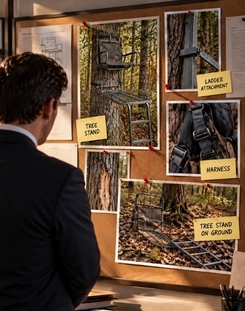
The most important evidence in a defective tree stand case is often the equipment itself. The stand should be treated like physical evidence, not scrap metal. A broken component should not be thrown away, repaired, returned to the retailer, or shipped back to the manufacturer before the parties have considered preservation and inspection.
A careful investigation may include the stand frame, platform, ladder sections, climbing sticks, cables, straps, pins, brackets, bolts, welds, fasteners, seat, harness, tether, carabiners or connectors, labels, manuals, packaging, receipts, photographs, and every broken or separated piece.
The tree and scene can matter too. Photographs can document attachment height, bark condition, the position of the stand, where components landed, the ground surface, and the relationship between the stand and the tree before evidence is moved.
Depending on the suspected failure, engineers and materials experts may examine fracture surfaces, corrosion, fatigue, weld penetration, metal thickness, cable construction, crimps, strap fibers, stitching, dimensional tolerances, load capacity, and the geometry of the attachment system. Microscopic examination can sometimes help distinguish progressive deterioration from a component that fractured only when it hit the ground.
The investigation should also extend beyond the physical product. Relevant evidence can include engineering drawings, design specifications, supplier records, quality-control documents, product testing, warranty claims, consumer complaints, prior incidents, recall materials, design changes, warnings, manuals, and applicable voluntary standards.
The Most Important Questions After a Tree Stand Collapses
- What component actually failed first?
- Did a cable fracture, corrode, pull through a crimp, or release from the attachment system?
- Did a strap tear, degrade, slip, or separate at stitching or hardware?
- Did a weld fracture or a structural member bend or buckle?
- Did a locking pin, J-hook, bracket, or fastener disengage?
- Could the hunter reasonably inspect the dangerous condition before the accident?
- Were replacement intervals and inspection instructions clear and adequate?
- Was the stand assembled and used in the manner contemplated by the manufacturer?
- Was the product manufactured according to its drawings and specifications?
- Were there earlier complaints, warranty claims, recalls, or similar incidents involving the same component?
- Did the safety harness and tether perform as intended?
- Did the component fail before the fall, or did it break because of the impact?
Those questions help separate a simple loss-of-balance accident from a mechanical or product failure. They also help identify which experts, documents, and companies may matter.
 Texas Product Liability Law and Defective Tree Stands
Texas law defines a products liability action broadly as an action against a manufacturer or seller for personal injury, death, or property damage allegedly caused by a defective product, whether the theory is strict liability, negligence, misrepresentation, warranty, or another theory. The exact claims available in a tree stand case depend on the facts and the particular defect.
A case may involve a manufacturing defect if the specific stand or component departed from its intended design. It may involve a design defect if the design itself created an unreasonable danger. It may involve warnings or instructions if the product did not adequately communicate a danger, inspection requirement, replacement interval, or limitation that was necessary for safe use.
For a Texas design-defect claim, Texas Civil Practice and Remedies Code Section 82.005 requires proof of a safer alternative design and that the defect was a producing cause of the injury or death. The statute defines a safer alternative design in terms of a design that, in reasonable probability, would have prevented or significantly reduced the risk without substantially impairing the product’s utility and that was economically and technologically feasible when the product left the manufacturer’s or seller’s control. (Texas Civil Practice and Remedies Code Chapter 82 — Products Liability)
Specific Texas statutory rules also govern liability of a nonmanufacturing seller. That is one reason a serious product case requires identifying who actually designed, manufactured, imported, distributed, assembled, altered, or sold the product rather than simply naming every company whose name appears on a receipt.
Who May Be Responsible for a Defective Tree Stand?
The answer depends on where the failure occurred in the product chain. Potentially relevant entities can include the stand manufacturer, a component manufacturer, an importer, a distributor, or another company that designed, assembled, modified, or supplied a critical part. A retailer may be relevant in some circumstances, but Texas law contains specific limitations on claims against nonmanufacturing sellers.
A cable case, for example, may require determining who specified the cable, who manufactured it, who selected the sheath material, who crimped the assembly, and who performed quality-control testing. A strap case may require identifying the supplier of the webbing or buckle and determining who established the inspection and replacement instructions. A weld failure may require reviewing drawings, welding procedures, material specifications, and manufacturing records.
The point is not that every company in the chain is automatically responsible. The point is that the investigation should follow the failure rather than assume the answer before the product has been examined.
 Why Recalls and Prior Incidents Matter
A recall does not automatically prove that a particular accident was caused by a defect, and a product does not have to be recalled before it can be defective. But recalls can be important investigative leads because they identify known failure modes, affected models or batches, and the component the CPSC and manufacturer believed presented a hazard.
Prior incidents can also matter, although whether evidence of another incident is admissible in court depends on the governing law and how similar the circumstances are. The O’Bryan litigation itself illustrates how significant that evidentiary issue can become: the Kentucky Supreme Court ordered a new trial after concluding that inadmissible other-incident evidence had been presented to the jury.
From an investigative standpoint, however, complaints, warranty claims, field reports, recalls, and engineering changes can help answer a basic question: had this type of failure happened before, and what did the companies involved learn from it?
Common Injuries From Tree Stand Falls
Falls from hunting stands can cause severe injuries because the hunter may fall from significant height onto uneven ground, roots, rocks, equipment, or other obstacles. Reported cases and recalls have involved vertebral fractures, rib fractures, orthopedic injuries, and fatal falls.
Depending on the height and landing mechanism, injuries can include spinal fractures, spinal cord injuries, traumatic brain injuries, broken legs and ankles, pelvic fractures, shoulder and upper-extremity injuries, internal injuries, paralysis, and wrongful death. These injuries can require surgery, rehabilitation, assistive care, and long-term medical treatment.
What to Do With the Tree Stand After a Serious Accident
After emergency medical needs are addressed, preserving the equipment can be one of the most important steps in determining what happened. Do not assume that returning a stand under a warranty or recall is the best first move when a serious injury or death has occurred. Returning the product may place the most important physical evidence outside the injured person’s control.
Instead, preserve the stand and all related components in their post-accident condition when reasonably possible. Keep photographs and videos. Preserve the manual, receipt, packaging, model and serial information, and any replacement parts. Identify witnesses who saw the stand before or after the accident. If the equipment must be moved for safety reasons, document its condition and location first when circumstances permit.
The goal is simple: allow qualified experts to examine the same equipment that was involved in the fall.
Defective Tree Stand Lawyers in Texas
Perkins & Perkins, Trial Lawyers represents individuals and families in serious personal injury, wrongful death, and defective-product cases throughout Texas. Product cases involving hunting equipment can require more than showing that someone fell. They may require mechanical engineering, metallurgy, materials analysis, product-design review, failure analysis, and careful preservation of the physical evidence.
When a cable breaks, a strap separates, a weld fractures, a pin releases, a ladder buckles, a platform collapses, or a safety harness fails, the equipment can tell the story of what happened. The earlier that evidence is preserved and examined, the better the opportunity to determine whether the accident was caused by a defective product.
If you or a family member suffered a catastrophic injury or death involving a hunting tree stand, climbing stand, ladder stand, hang-on stand, climbing stick, cable, strap, platform, or safety harness, Perkins & Perkins can investigate the equipment and the companies involved to determine what legal options may be available.
Call Perkins & Perkins at (361) 853-2120 or visit PerkinsPerkinsLaw.com. We offer free consultations, and there is never a fee unless we recover for you.
Frequently Asked Questions About Defective Tree Stand Accidents

Does a tree stand have to be recalled for me to have a product liability claim?
No. A recall can provide important evidence and identify a known failure mode, but the absence of a recall does not by itself establish that a product was safe or defeat a product-liability claim. The specific product, failure mechanism, warnings, design, manufacturing evidence, and causation still have to be investigated.
What if the tree stand was several years old?
Age can be important, especially for cables, straps, and other components subject to corrosion, weathering, UV exposure, abrasion, or fatigue. But age alone does not answer whether a product was defective. The investigation may focus on expected service life, replacement instructions, inspection requirements, hidden deterioration, prior use, storage, and whether the product performed as reasonably expected under the circumstances.
What if the hunter was not wearing a safety harness?
Harness use can be an important issue in a fall case, but it does not answer why the stand failed. The failure of a stand and the consequences of not using a harness can present separate causation and responsibility questions. The facts of the particular accident matter.
Should I send the broken stand back to the manufacturer?
After a catastrophic injury or death, physical evidence should generally be preserved before it is altered, repaired, destroyed, or surrendered. A lawyer and qualified expert can help determine how the equipment should be stored and inspected while respecting any applicable preservation obligations.
What experts are used in a tree stand product case?
Depending on the suspected failure, the investigation may involve mechanical engineers, metallurgists, materials engineers, polymer or textile experts, warnings experts, accident reconstruction professionals, or other specialists. The right expert depends on what failed and why.
Sources and Further Reading
- S. Consumer Product Safety Commission — API Outdoors treestand cable recall (2002)
- S. Consumer Product Safety Commission — API Outdoors Marksman recall (2015)
- S. Consumer Product Safety Commission — Big Game climbing stand recall (2015)
- S. Consumer Product Safety Commission — Ameristep J-hook recall (2006)
- S. Consumer Product Safety Commission — Ol’ Man locking-pin recall (2007)
- S. Consumer Product Safety Commission — Field & Stream Timberline recall (2019)
- S. Consumer Product Safety Commission — Rhino safety harness recall (2023)
- Coker v. API Outdoors, No. 5:23-cv-511 (M.D. Ga. Feb. 24, 2026)
- Primal Vantage Co. v. O’Bryan, Kentucky Supreme Court (2023)
- Texas Civil Practice and Remedies Code Chapter 82 — Products Liability
Disclaimer: This article is for informational purposes only and does not constitute legal advice. Reading this article does not create an attorney-client relationship. Every case is different, and outcomes depend on the specific facts and applicable law.